
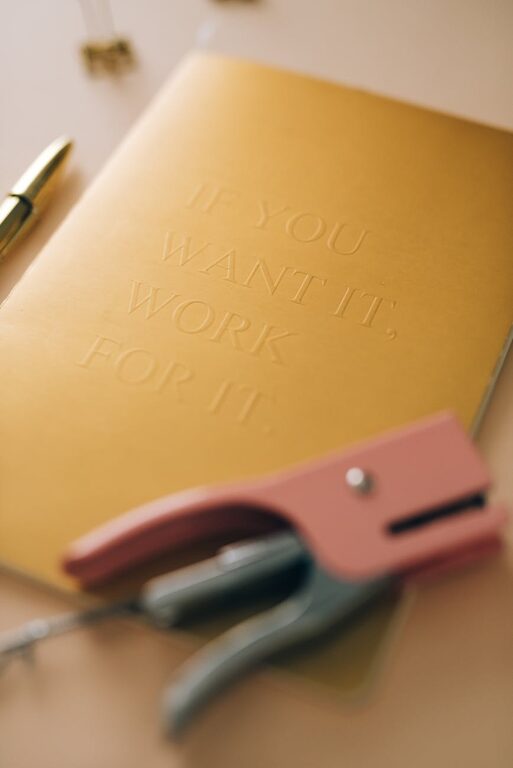
Choosing the right notebook might seem straightforward, but with so many options available, it can become overwhelming quickly. Whether you want to jot down ideas, keep a journal, or organize your daily tasks, picking a notebook that fits your needs and preferences is key to making sure you actually use it. This guide will help you find the perfect notebook that inspires you to write and keeps you coming back page after page.
Why Choosing the Right Notebook Matters
A notebook isn’t just a collection of blank pages — it can be your creative outlet, your planner, or your personal space to brainstorm. When you invest time finding one that suits your style and workflow, you’re more likely to use it consistently. An uncomfortable size, poor paper quality, or an uninspiring design may discourage you over time.
Step 1: Consider How You’ll Use Your Notebook
Before picking your notebook, take a moment to think about what you want it for. Different uses may call for different features.
Journaling and Personal Reflection
– You might prefer a notebook with thicker, high-quality paper to prevent ink bleed-through.
– A beautiful cover or a layout with prompts can provide extra motivation.
– Size matters: A portable notebook fits easily in your bag, encouraging more frequent use.
Work or Study Notes
– Durable binding and a sturdy cover help your notebook survive daily handling.
– Page layouts with lines or grids can organize notes neatly.
– Some prefer numbered pages, index sections, or perforated pages for easy removal.
Creative Projects and Sketching
– Blank or dotted pages are better for sketches, mind maps, or mixed media.
– Paper weight should be heavier to handle pencils, pens, and markers without warping.
– Spiral bindings allow the notebook to lie flat, making drawing easier.
Step 2: Choose the Right Size and Binding
Size
– Pocket-sized (A6 or smaller): Ultra-portable and perfect for quick notes.
– Medium (A5 is most popular): Balances portability with enough writing space.
– Large (A4 or larger): Best for detailed notes, sketches, or planning.
Binding Types
– Spiral-bound: Lies flat and folds back easily, great for left-handed writers.
– Perfect bound (glued spine): Sleek for professional use but may not lie flat.
– Sewn binding: Strong and durable with a classic feel.
– Hardcover: Offers protection and longevity but can be heavier.
Step 3: Decide on Paper Quality and Layout
Paper quality directly affects your writing experience.
Paper Weight and Texture
– Standard notebooks use paper around 70-80 gsm (grams per square meter).
– Thicker paper (90-120 gsm) resists ink bleed and handles various pens.
– Smooth paper works well with ballpoint pens; textured paper suits pencil or fountain pens.
Page Layouts
– Lines: Great for writing and keeping words straight.
– Dot grid: Flexible for writing, drawing, and designing.
– Grid: Useful for charts, graphs, and precise drawings.
– Blank: Ideal for freeform sketches and notes.
– Some notebooks combine layouts or offer numbered pages for easy referencing.
Step 4: Consider Additional Features
The extra touches can make a notebook more enjoyable to use.
– Page markers or ribbons help you keep your place.
– Elastic bands keep the notebook closed and protect pages.
– Inner pockets can store loose notes, receipts, or stickers.
– Numbered pages and indexes are excellent for organization.
– Perforated pages make tear-outs neat and easy.
Step 5: Think About Your Budget
Notebooks come in a wide range of prices. Setting a budget can help narrow choices without compromising quality.
– Affordable brands offer solid options for everyday use.
– Premium notebooks might cost more but offer better materials, durability, and design.
– Consider how much you value the writing experience since a slightly higher price can motivate consistent use.
Step 6: Test Before You Commit
If possible, visit a store to handle different notebooks. Tap the paper, feel the cover, and flip through several options. This helps you find what feels right.
If shopping online:
– Read customer reviews focusing on paper quality and durability.
– Check sample pages or photos to evaluate layouts and thickness.
– Many brands offer sample packs or smaller notebooks to try before investing in larger ones.
Bonus Tips: Making Your Notebook a Habit
– Personalize your notebook with stickers, drawings, or color tabs.
– Set a daily or weekly routine to write or plan.
– Use your notebook actively, don’t just keep it on a shelf.
– Pair your notebook with a favorite pen or pencil to enhance the experience.
Conclusion
Choosing the right notebook goes beyond picking a pretty cover. By considering how you plan to use it, the size, binding, paper quality, and extra features, you increase the chances of consistently using it. Remember, a notebook that fits your style and workflow can be a powerful tool to organize your thoughts, spark creativity, and track your progress. Take your time, test a few, and soon you’ll find one you truly enjoy using every day. Happy writing!